

When choosing a running watch, the most common mistake is starting with the frame of 'Apple is the best' or 'Garmin is the best.' The real questions are different: How often can you charge it? Where do you run? How deeply do you want to analyze your training data? The answers to these three questions will lead you to different conclusions.
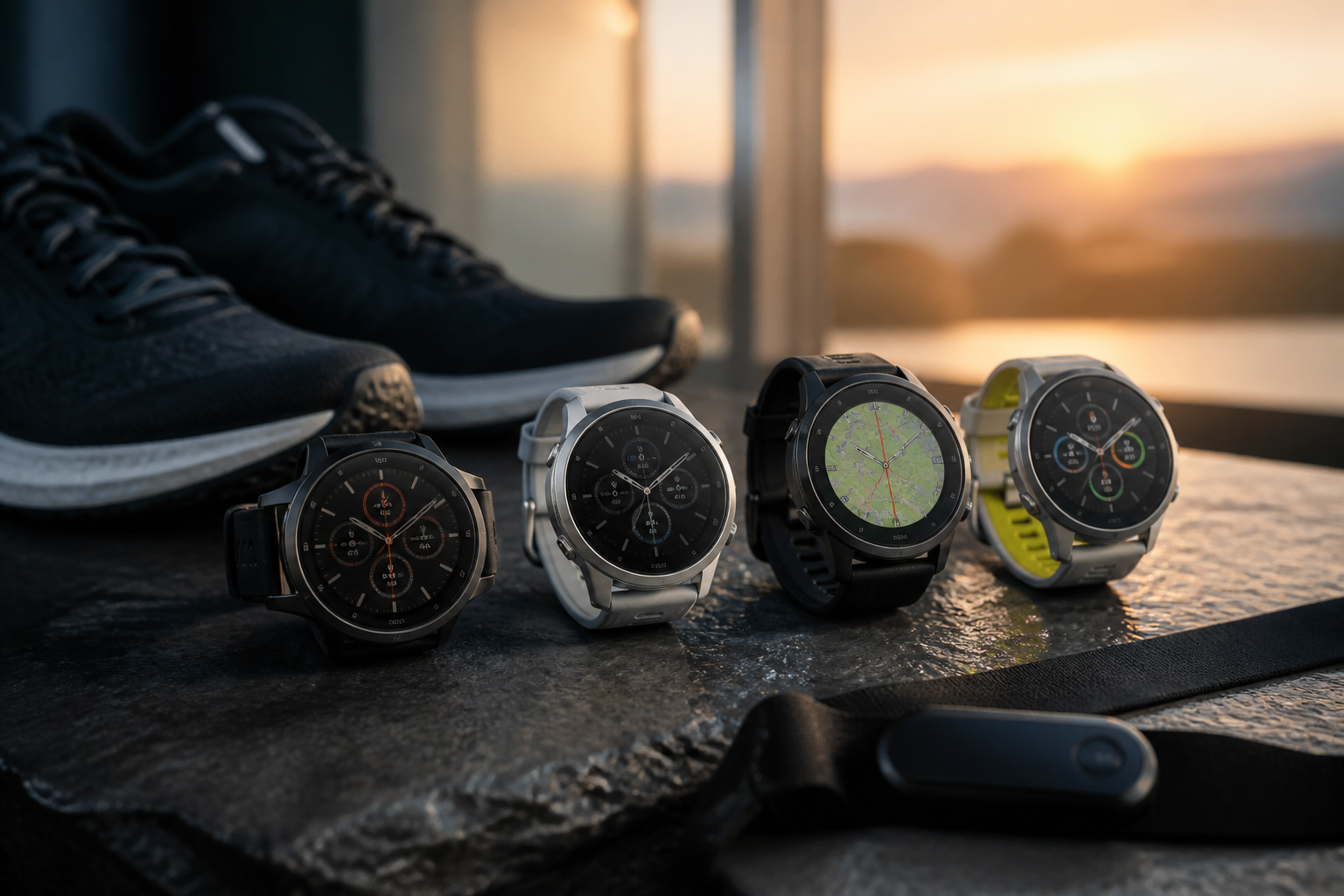
This article re-evaluates the four most compared models among American runners in 2026 using the same criteria: Garmin Forerunner 965 ($599), Apple Watch Ultra 2 ($799), Coros PACE 3 ($229), and Suunto Race ($449). Instead of just transferring the spec sheets, we translate what changes during long Sunday runs and marathon training.
📌 Summary in 3 Points
- The battery life is Suunto Race 40 hours > Coros PACE 38 hours > Apple Ultra 2 36 hours (in power-saving mode) > Garmin 965 31 hours (all based on continuous GPS use). For a full marathon of 4 hours, all four have ample battery life, but for ultra or triathlons, the differences can influence your choice.
- The Coros PACE 3 is the most affordable at $229, while the Apple Watch Ultra 2 is the priciest at $799. When considering 'running performance' per dollar, the PACE 3 and Suunto Race are the clear winners.
- Full-color offline maps are supported by Garmin 965 and Suunto Race. If you're running in unfamiliar cities or mountain trails, this feature can be worth hundreds of dollars.
1. Each Device Answers Different Questions
The most common misconception is ranking these four watches as if they are all in the same category. In reality, they cater to different needs: Triathlon and ultra runners (Garmin 965), Apple ecosystem integration (Ultra 2), cost-effective training (PACE 3), and long-distance battery specialization (Suunto Race)—each with distinct weights, prices, and functionalities.
- Garmin Forerunner 965 ($599): Features a 1.4-inch AMOLED full-color touch screen with offline maps, dual-band (multi-band) GNSS, Training Readiness, and HRV Status, representing the pinnacle of Garmin's training ecosystem. Continuous GPS use lasts about 31 hours, while smartwatch mode lasts around 23 days. Weighing only 53g (with a silicone band), it remains lightweight despite its large display. If you're targeting triathlons or ultra events, this is the benchmark in this group.
- Apple Watch Ultra 2 ($799): Boasts a maximum brightness display of 3000 nits for clear visibility outdoors, cellular options, and a robust watchOS app ecosystem. In GPS mode, it lasts about 36 hours (in low-power settings), while standard GPS mode lasts around 12 hours. This is a choice for those looking to merge a daily smartwatch with a running watch, offering the best integration for iPhone users among the four devices. However, its training analysis depth is somewhat shallower compared to Garmin and Coros.
- Coros PACE 3 ($229): A price rebel. With dual-band GNSS and continuous GPS use lasting about 38 hours, it is the lightest in this group at just 32g, making it the quietest on the wrist. It includes essential metrics like competitive analysis and training load management. While it lacks map support, its running data can compete with devices three times its price.
- Suunto Race ($449): Equipped with AMOLED, full-color offline maps, and dual-band GNSS, it boasts the longest continuous GPS use at about 40 hours. Weighing 83g, it is slightly heavier, but its combination of maps, battery life, and price earns it the reputation of offering 'three-quarters of Garmin 965's performance at half the price.'
In summary: Garmin excels in training ecosystem and maps, Apple leads in daily integration, Coros offers the best value for pure running performance, and Suunto balances maps and battery life.
2. Specs at a Glance (Based on 2026 U.S. Sales)
| Category | Garmin FR 965 | Apple Watch Ultra 2 | Coros PACE 3 | Suunto Race |
|---|---|---|---|---|
| U.S. Retail Price | $599 | $799 | $229 | $449 |
| GPS Satellites | Multi-band (Dual+) | L1 Single-band | Dual-band | Dual-band |
| Continuous GPS Battery | About 31 hours | About 12 hours (standard)/36 hours (power-saving) | About 38 hours | About 40 hours |
| Smartwatch Mode Battery | About 23 days | About 36 hours (up to 72 hours in power-saving) | About 17 days | About 12-14 days |
| Display | 1.4" AMOLED Touch | 1.92" AMOLED · 3,000 nits | 1.2" MIP Touch | 1.42" AMOLED Touch |
| Full-color Offline Maps | Supported | Map app integration (limited on-watch navigation) | Not supported (waypoints only) | Supported |
| HRV & Training Metrics | HRV Status·Training Readiness·Load·Recovery Time | HRV (health data)·Training Load (basic) | HRV·Competition·Training Load | HRV·Training Adaptation·Load |
| Weight (Case) | 53g (Titanium) | 61g (Titanium) | 32g | 83g |
| Water Resistance Rating | 5ATM | 100m (EN13319 Diving Standard) | 5ATM | 10ATM (100m) |
| Music Storage | Offline integration with Spotify, etc. | Offline with Apple Music, etc. | MP3 storage | MP3 storage |
| Warranty | 1 year | 1 year (AppleCare+ optional) | 2 years | 2 years |
💡 How to Read Battery Specifications
Manufacturer specifications are based on 'GPS fix rate in low-power mode.' When dual-band GNSS is activated, the 965 lasts about 25 hours, while the Race lasts about 28 hours. If you're an ultra runner, consider recalculating based on 'time with dual-band on.'
3. GPS Accuracy: Why Dual-band Matters
In urban canyons and mountainous terrain, GPS errors are not just about distance records but also affect the reliability of pace training. In urban areas with tall buildings, satellite signals can reflect and cause fluctuations, while dual-band (L1+L5) filters out these reflections and uses two frequency bands from satellites simultaneously to reduce errors.
- Equipped with Dual-band GNSS: Garmin 965 (multi-band), Coros PACE 3, Suunto Race. The 'zigzagging track' in urban and forest trails is noticeably reduced.
- Single-band (L1): Apple Watch Ultra 2. There is almost no difference in flat park runs, but errors can increase during pace segments between tall buildings. While Apple has excellent correction algorithms, there are physical limitations.
- Measured standards (common conclusions from U.S. reviews like DC Rainmaker): In open terrain, all four devices have errors within 1%, making them effectively equivalent. The differences emerge in urban and mountainous environments.
💡 Selection Criteria
If you primarily run in urban areas (like New York or Chicago) or on trails, choose among the three dual-band options. If you mostly run on tracks, parks, or suburban roads, the single-band (Ultra 2) will be perfectly fine.
4. Heart Rate & HRV Sensor Precision: Limitations of Wrist Measurement and Training Metrics
All four devices feature wrist heart rate sensors that are third-generation or higher, and the resting heart rate and HRV variability trends are virtually equivalent. The differences lie in response speed during high-intensity intervals and how that data is interpreted.
- Garmin 965: Elevate v4 sensor + HRV Status (tracks 5-minute average HRV during sleep), Training Readiness, Acute Load, and Recovery Time, providing a comprehensive calculation for training decisions. The depth of data in the Garmin ecosystem is the core strength of this device.
- Apple Ultra 2: Uses HRV as a daily health metric and provides accurate workout heart rate zones, but training load and adaptation analysis relies on third-party apps (TrainFitness, Athlytic, etc.).
- Coros PACE 3: Comes with competitive analysis and training load management as standard features. Accuracy improves further when paired with a heart rate strap (optional).
- Suunto Race: Offers training adaptation and recovery metrics, receiving good reviews for wrist HRV measurement stability.
In summary, the 'sensors themselves' are similar across the board, while the 'advice derived from that data' is deepest with Garmin and shallowest with Apple. If serious training management is your goal, adding a heart rate strap will provide greater accuracy than switching watches.
5. Battery: Time Based on Training Cycles
| Usage Pattern | Garmin FR 965 | Apple Ultra 2 | Coros PACE 3 | Suunto Race |
|---|---|---|---|---|
| 5 times a week · 1 hour per session GPS | About 4-5 days | About 2 days (3 days in power-saving) | About 7 days | About 7 days |
| Full marathon consumption | About 13% | About 33% (in standard mode) | About 11% | About 10% |
| 100km ultra (10-12 hours) | Ample | Power-saving mode essential | Ample | Ample |
| Daily charging cycle | Once every 2 weeks | Daily charging required | Once every 1-2 weeks | 1-2 times a week |
The practical meaning of battery life is not whether it dies during long runs, but rather the conflict between sleep tracking and charging routines. Apple requires nightly charging, making it easy to lose sleep data, while Coros, Suunto, and Garmin can last a week even if you forget to charge. If you use sleep HRV for training adjustments, this difference is significant.
6. Offline Maps and Navigation
- Garmin 965: Comes with full-color offline maps for worldwide use. Includes turn-by-turn navigation and a back-to-start feature, making it essential for unfamiliar travel destinations and trails.
- Suunto Race: Supports full-color offline maps and route exploration. While its map interaction (zooming and moving) is somewhat simpler compared to Garmin, it is sufficient for most needs.
- Coros PACE 3: Does not include maps but provides waypoint and route arrow guidance. If the goal is to maintain a course rather than getting lost, this is adequate.
- Apple Ultra 2: Allows route checking through a watch map app, but displaying the map on the running screen differs from the other two devices. If you have an iPhone nearby, this issue is minimized.
7. Selection Guide by Runner Type
| Runner Type | Recommendation | Reason |
|---|---|---|
| Serious trainers aiming for marathon sub-pro | Garmin FR 965 | Training Readiness, HRV Status, and the depth of training data are unmatched. Maps and battery life are also sufficient. |
| iPhone-centric, integrating daily life and running | Apple Watch Ultra 2 | Best ecosystem integration and display quality. However, daily charging and shallow training analysis are trade-offs. |
| Cost-conscious, focusing on essentials, beginner to intermediate | Coros PACE 3 | At $229, it offers dual-band GNSS, 38 hours of battery life, and weighs only 32g. Its running data is comparable to more expensive devices. |
| Trail and travel runners needing maps | Suunto Race | Full-color maps, 40-hour battery life, and priced at $449. It captures the essence of Garmin 965 at half the price. |
8. Frequently Asked Questions
Q. Should I buy the Garmin 965 or the Apple Ultra 2?
If your running is focused on training, go for the 965; if running is a part of your lifestyle, the Ultra 2 is the way to go. If you want seamless notifications, payments, and apps on your watch, the Ultra 2 is the answer. If weekly training plans and recovery management are your priorities, then the 965 is your best bet.
Q. Is the $229 PACE 3 sufficient?
It is more than adequate for 10K, half-marathon, and full-marathon training. The dual-band GNSS and 38-hour battery life are on par with higher-end devices. The only limitations are in maps and the depth of advanced metrics. It is the most reasonable choice among this group for a first running watch.
Q. Are the devices and prices the same in Korea?
All four devices are officially released in Korea. However, the local prices may differ from U.S. retail prices due to exchange rates and promotions. For the Apple Watch cellular model, check the carrier activation conditions in Korea. Always verify the latest prices and warranty conditions on the official local sales page before purchasing.
Q. Should I buy a heart rate strap separately?
If you do interval training two or more times a week, a strap (chest band) will definitely provide better accuracy and response speed than wrist measurements. All four devices support Bluetooth and ANT+ straps, so adding a strap is a more cost-effective upgrade than switching watches.
The essence of a running watch is not just the list of features but 'what doesn't stop in your training cycle.' Can you afford to charge it every night? Do you need maps on unfamiliar routes? Do you want to manage recovery through data? Once you have answers to these three questions, one of these four devices will naturally stand out.
📌 Editor's 3 Key Takeaways
- GPS battery life is Suunto 40 hours > Coros 38 hours > Apple 36 hours (power-saving) > Garmin 31 hours. Unless you're in an ultra event, all four are sufficient.
- The key to accuracy in urban and trail settings is dual-band GNSS. Coros, Suunto, and Garmin have this feature, while differences are hard to notice in parks and tracks.
- The depth of training data is Garmin, daily integration is Apple, value for money is Coros at $229, and the balance of maps and battery life is Suunto at $449. Prioritize your 'training style' over budget to find the right answer.
Official specs for Garmin Forerunner 965 · Apple Watch Ultra 2 · COROS PACE 3 · Suunto Race · DC Rainmaker's detailed reviews